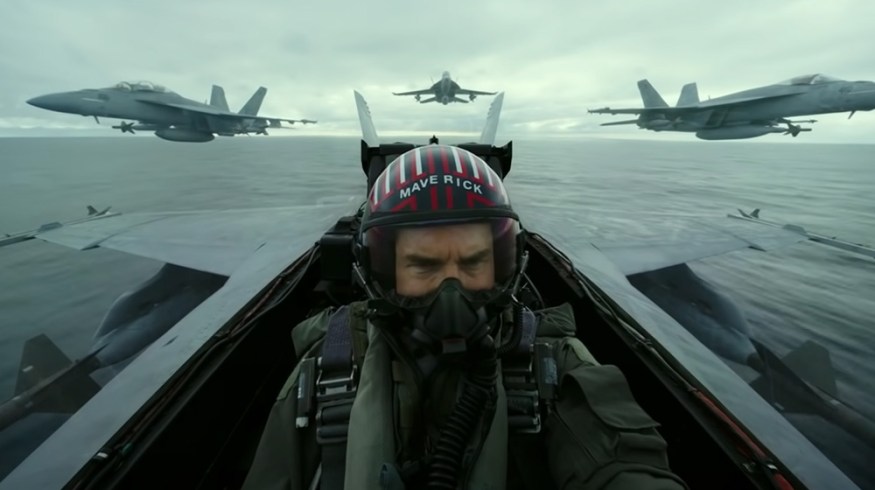
An Ode to Top Gun

With the release of Maverick, Top Gun is now a storied franchise. Let’s see what 35 years and an obsession with aviation can do for a cinematic icon.
In the age of social media, it’s not uncommon to hear a famous filmmaker’s hot-take about the latest summer blockbuster. And while it’s great to hear what my favorite screenwriter thinks of the latest Oscar nominations, the comments often become white noise. However, there’s still one voice that will rise to the top when he talks about a film, and that is the voice of Quentin Tarantino.
Tarantino doesn’t use social media, so you won’t hear him talk about the latest cinema release every time you refresh Twitter. But when you get Tarantino talking about films, he talks. He talks a lot, and it trickles down into your social media channel of choice. In recent years, he’s been appearing on podcasts to impart his godly knowledge of film. (One of my favorite Tarantino segments is when he goes on a five-minute tangent about why Chris Pine is one of his favorite actors.)
Tarantino has also recently started a podcast called The Video Archives Podcast with Quentin Tarantino & Roger Avary (collaborator from Pulp Fiction) where you can hear him talk about movies for hours on end.
But, of interest to us here, is what Tarantino had to say recently about Top Gun: Maverick.
I f****** love ‘Top Gun: Maverick. . . . There was just this lovely, lovely aspect because I love both Tony Scott’s cinema so much, and I love Tony so much that that’s as close as we’re ever going to get to seeing one more Tony Scott movie. [Kosinski] did a great job. The respect and the love of Tony was in every frame. It was almost in every decision. It was consciously right there, but in this really cool way that was really respectful.
Need we say more?
Well, yes — we probably should. This would be a concise article otherwise.
We agree, Mr. Tarantino. Even for a die-hard Top Gun enthusiast like your humble Gen X author here, I was surprised by how good it was. A friend texted right as I left the theater, asking what I thought.
I told him it belongs in the Louvre.
Seriously?
Yes, seriously. The Top Gun saga sequences the original and Maverick like genes. You can watch and enjoy the first one without the second one, natch, but the whole experience of the sequel is grounded in the original. But wait, you say. Isn’t that how all sequels work? To varying degrees, yes. Every series links the installments in its franchise, but the viewing experiences aren’t always critical for a full appreciation. Sometimes you can skip one or two and still kind of “get it” all.
And maybe you did skip the original Top Gun. Can you still watch Maverick? Of course. You’re a living, breathing human being with a mind of your own. But as long as we’re strolling around inside the Louvre, do you want to do so with one eye closed?
Okay, fine, you say. Why is it important to appreciate the two films as a package deal? Well, it has to do with the particular circumstances of the first film — including global geopolitics, pop culture, and even the rise of the home video industry.
The Cold War
In 1947, the U.S. announced the Truman Doctrine, which was a pretty petty way to break up with the Soviet Union. The two countries had teamed up to defeat Hitler during WWII, but then, the U.S. was, like, “Look. We really want to contain Soviet geopolitical expansion,” and, well, that bromance died hard. The Cold War that followed would continue until 1991 when the Soviet Union just collapsed.
We call it the “Cold War” because the belligerents (U.S. and U.S.S.R.) never fired directly at each other. Instead, they duked it out like passive-aggressive relatives at Thanksgiving. Proxy wars were the weapons of choice. Each power would back a different side in a conflict (you can thank many of these proxy wars and the belligerents they empowered for the shape of modern geopolitics).
First, there was the Berlin Blockade, then the Chinese Civil War, the Korean War (Wassup, North Korea!), the Hungarian Revolution, the Suez Crisis, the Berlin Crisis, the Cuban Missile Crisis, the Prague Spring, and (last but not least) the Soviet-Afghan War (which gave us the Afghan Civil War and the rise of the Taliban). All of these conflicts would have unintended consequences that would ultimately result in a lot of repressions, a lot of suffering, and a whole lot of death.
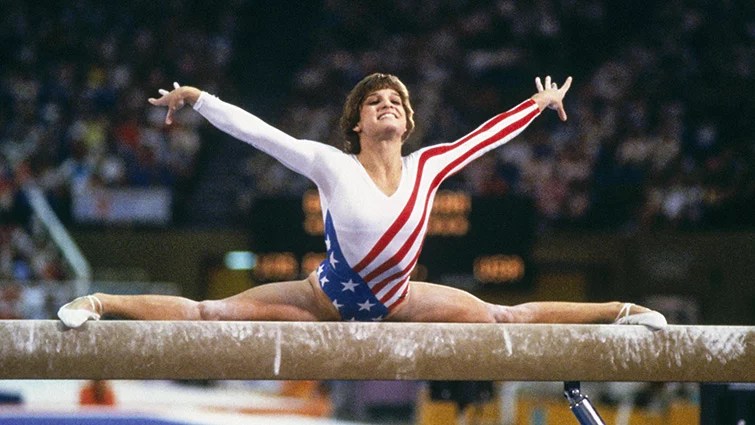
But, before we move on, importantly for our appreciation of Top Gun, then there were also propaganda wars, espionage, culture wars, athletic rivalries, and even the space race. NATO (U.S. and friends) and the Warsaw Pact (U.S.S.R. and friends) were anathema. Both blocs vied for world dominance in just about everything, and if you grew up before the end of the Cold War, it was a nerve-wracking time. The existential threat of nuclear annihilation was genuine, and it influenced everything.
Everything was fair game in The Cold War. Again, except shooting at each other. Because that, thanks to the doctrine of mutual assured destruction, would end the whole world.
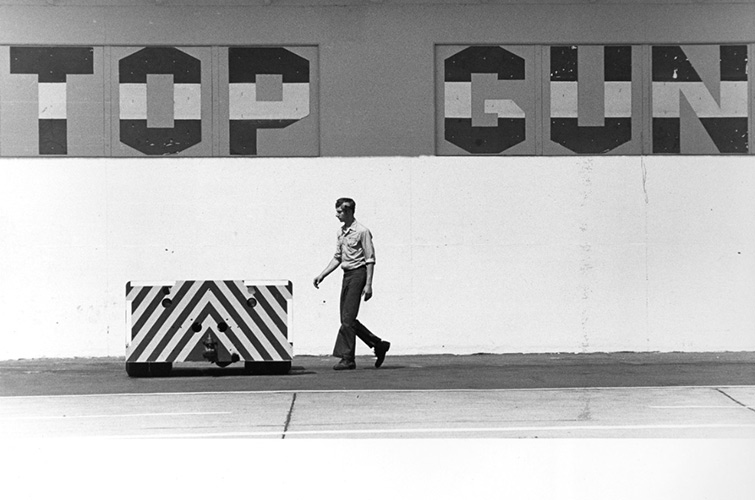
So, in the midst of all this, 1983 comes along, and an article appears in California magazine titled “Top Guns.” It featured a bunch of cool aerial photography by Lieutenant Commander Charles “Heater” Heatley, and it told the story of the fighter pilots at Naval Air Station Miramar in San Diego, California — which the fighter pilots affectionately called “Fightertown, U.S.A.” Jerry Bruckheimer and Don Simpson struggled to find a writer to turn this article into the beloved blockbuster we all know and love, but in the process, they connected with Jack Epps, Jr., who, as part of his research for the script, got to sit in on some declassified sessions at Topgun, the Fighter Weapons School we can thank for the name of the movie.
Fast-forward to 1986; Top Gun comes out in theaters. Its aerial cinematography garners universal praise. It’s the coolest thing we’ve seen in ever. So cool, in fact, that the U.S. Navy famously set up recruiting stations outside of some theaters screening the film . . . and it worked. People enlisted. Top Gun was the highest-grossing film of 1986.

That’s pretty high-profile, and what’s at the center of the conflict in this blockbuster? The U.S. vs. . . . uh, a mystery nation with made-up jets that rhymes with “Shmoviet Shmunion.” The villainy was pretty transparent, and it was yet another critical blow in the Cold War mind game. The U.S. can kick ass—this amazing thriller just showed us so, and it would go on to be so critical to late-Cold War American identity that the Library of Congress selected it for preservation in the National Film Registry for being “culturally, historically, or aesthetically significant.”
Needless to say, the U.S. really liked Top Gun.
It wasn’t without controversy, however. The film romanticizes war, excuses sexism, and suffers from what some have called an adolescent sub-plot. Oliver Stone famously told Playboy that the film posits that “war is clean, war can be won . . . nobody in the movie ever mentions that [Maverick] just started World War Three!” In 1990, Tom Cruise said there couldn’t be a sequel to the film because it created a “misleading view of war.”
. . . 😶 . . .
But the juggernaut had been unleashed. The home video market was starting to take off. You had to decide if you were a V.H.S. or a Betamax family, and then you started paying exorbitant rates for movies you could watch at home. Cue the rise (before the fall) of Blockbuster Video, and, eventually, DVDs would come along, and you could rent them by mail. What a quaint idea.
Top Gun was the first video cassette priced as low as $26.95, backed by a multi-million dollar advertising campaign and a Diet Pepsi commercial. Unsurprisingly, it became the bestselling video cassette in the young industry’s history.
Growing up, anytime my dad’s friends got a new stereo or surround system, we would all have to gather and pay homage with a few minutes of Top Gun. Clearly, this wasn’t just because it was the cinematic accomplishment par excellence to show off your new system — it was also because you were statistically likely to have this movie, given its price and advertising. The iconic scenes in this decidedly homosocial (and arguably jingoistic) cultural archive would spawn spoofs and ripoffs and speculation about sequels for 35 years.
That’s a whole bunch. The film also has a clean, three-act structure that’s highly teachable, a kickass soundtrack (it won an Academy Award and a Golden Globe for “Take My Breath Away”), and the most famous beach volleyball scene in cinema history. (The trick behind the up-down high-five is to keep your eye on your friend’s elbow while you’re doing it. Trust me — we practiced as kids.)
And whatever you think of this film and its place in American cultural and cinematic history — what a time to debut — the challenges behind its production were legion (the Navy only fired two missiles, and the filmmakers had to capture them from multiple angles for all the shots they wanted, to name just one). Tony Scott directed this complicated masterpiece, and the lengths his crew went to in order to lay the groundwork for what would become the almost unimaginably complex process of filming the sequel are extraordinary.
Upping the Ante
Before there was a Top Gun: Maverick to discuss, there had to be the grueling making-of. And it was genuinely grueling. Much like the original cast did back in the ’80s, the cast of Maverick had to undergo serious training well before the first day of shooting. Cruise and Bruckheimer were adamant that if they were going to make this costly movie with a heavyweight reputation at stake, they would do it right.
For Bruckheimer, that meant it had to recreate the experience of a Top Gun pilot, not just capture it on film. This is where all that work began, making Tarantino flip out about this Tony Scott-esque thrill ride.
As we can see in this featurette by Xplained, preparing the cast to knock around in F/A-18 Super Hornets involved a few progressive steps. It started with G-Force training. One “G” is the experience of gravity we ordinary humans experience just walking around on the planet. If you put us in things and make us go fast, that G-force increases. Hop onto your favorite roller coaster, and you can clock about five Gs. Land a role as a fighter pilot in the biggest aviation film in 35 years, and they’re going to take you up to seven or eight Gs.
Real pilots have to train for this because extreme G forces can cause G-LOC (g-force-induced loss of consciousness). The blood drains out of your brain, causing cerebral hypoxia, so you go to sleepytown while your jet is left without a pilot. The crazy thing about jets without pilots (that weren’t designed that way, like drones), is that they like to smash into things and blow up. To learn how to fight off G-LOC, pilots sit in giant centrifuges and spin around real fast. With the proper training and practice, you can learn how to not take a jet nap in the middle of a dogfight.
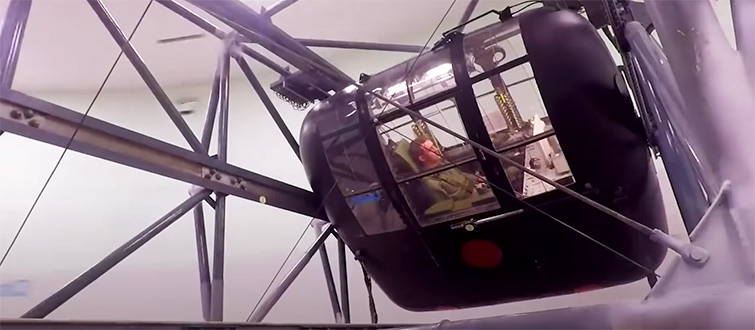
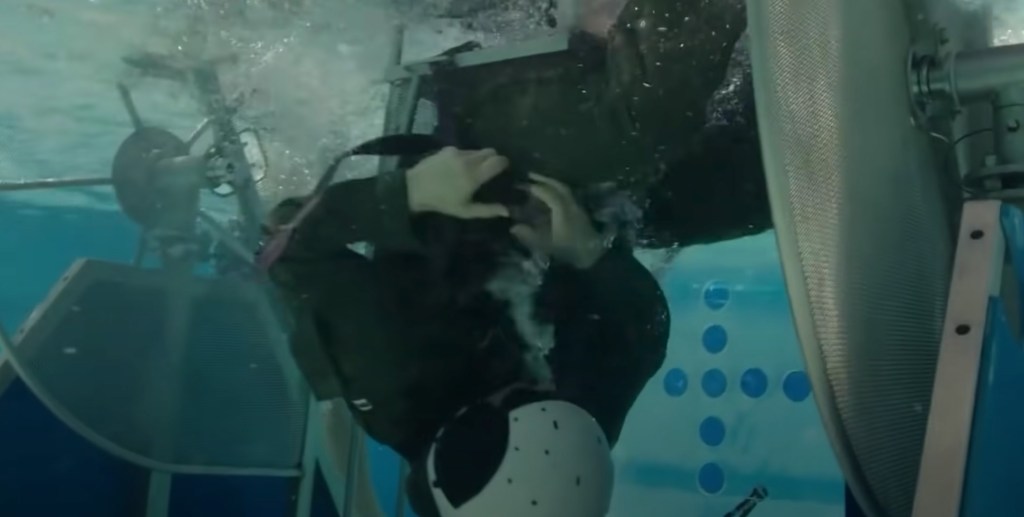
Next up for the cast of Maverick was the “Naval Aviator Over Water Survival Training Course.” We all know from the first film how essential this training is (a moment of silence for Goose, please . . . ). Besides being submerged, made to swim in flight gear, and subjected to other underwater discomforts, the cast had to endure what they called “The Dunker,” which was an artificial cockpit. Attendants strap you in, blindfold you, flip you upside down, and then force you (and the giant machine holding you) underwater. The name of the game is to get out without panicking — or running out of air.
Speaking of G-LOC, there are other fun ways of becoming stupid and passing out at high altitudes. One of the easiest is to lose your supply of oxygen. G-LOC hits rather abruptly as G-forces mount and pull the blood out of your brain. But, if you lose your supply of oxygen slowly, you can keep your blood, but it doesn’t do you any good. You’ll start getting confused, coughing, sweating, and your heart rate will increase to try to keep your entire cardiovascular system functioning.
To experience this (and learn to recognize the warning signs), you get in a giant hyperbaric chamber, and you start breathing through a mask with a steady supply of oxygen. Then, you turn that air off and try to do simple things like card tricks or patty cake. The longer you go without sufficient oxygen, the stupider and gigglier you get.
So, if you’re ever knocking around in a jet at 25,000 feet and things start getting screwy, you better bring that plane back down a bit and figure out who pinched the oxygen.
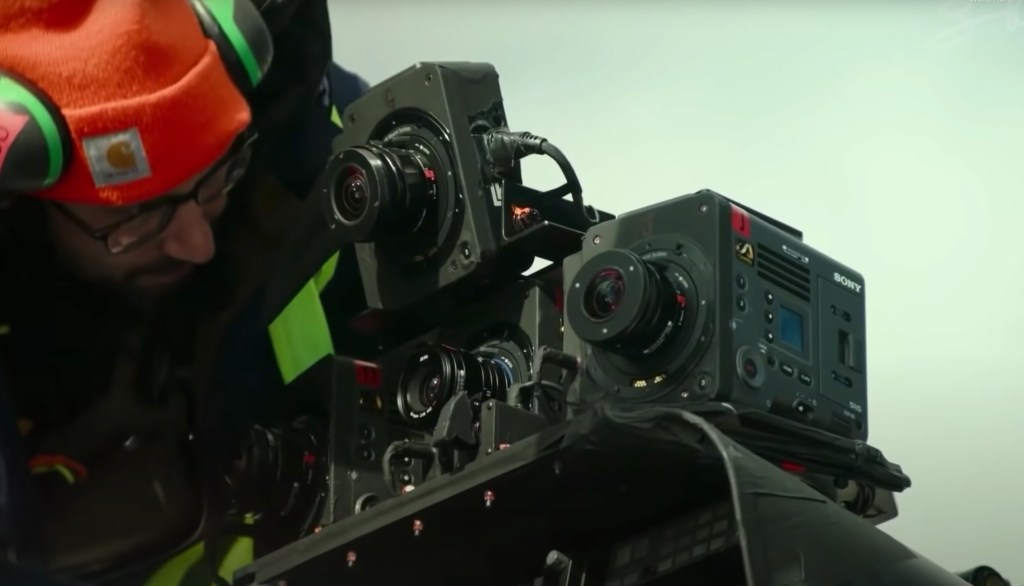
The final stage of their preparation to begin filming the movie involved becoming cinematographers. There’s no way you can get a crew — even a single person — in a jet like this. You can simulate it with cut-outs and green screens on the ground, but that was out of the question for this ambitious aerial odyssey. There’s room for a pilot and, luckily, an actor. That’s it.
The filmmakers worked with the experts at the real Top Gun to develop an in-cockpit rig of six (IMAX-quality) cameras that the actors could operate to film themselves up in the wild blue yonder. So, not only did they have to not pass out, not puke, and not flub their lines, but the actors had to also monitor lighting conditions, consider exposure, and operate these very-expensive and very-sophisticated camera rigs.
Once the cockpits were good to go, the filmmakers needed aerial exterior shots as well, so they affixed some cameras to the outside of the jets (and chase-jets), and then they staged some very careful ground shots. Jets passing overhead at high velocity and low altitude tend to do some collateral damage to the buildings and props below, so in some instances, Kosinski only got one shot before his set was destroyed.
The Payoff
If this article feels a little lopsided to you, very good — you win a prize. I have a lot more to say here about the original installment than I do the sequel for a good reason: you’ve had plenty of time to watch Top Gun, but other than discussing the production achievements of Maverick, I don’t want to go into too much detail. I’ll tell you this, there’s a compelling, video game-esque plot line, plenty of fan service with nods to the original, an age-appropriate and decidedly less tongue-y love story than in the original film, a shirtless scene dialed to 11 — there’s even some humor that was missing from the first film as well as an absolutely harebrained climax that you can see from a mile away but that will still get you out of your seat.
The aerial acrobatics, of course, speak for themselves. There are enough shots in the featurettes in this blog post alone to completely spoil that for you. Hell, the Blue Angels won’t even do some of the stunts the real aviators pulled off in Maverick. I mean, there’s this one scene, and you’ll know it when you see it, where all you can do is stare and wonder how physics work. My friend, the fellow Top Gun fan I mentioned above, called me after he’d seen it, and his first question was “What the hell was that [scene]?”
I can’t wait for you to see it.
I don’t know if we’ll see a Top Gun 3. I don’t think we need one, but I didn’t think we needed Maverick either. The magnitude of the 35-year gap between installments one and two created an absolutely seismic sense of anticipation. Can you replicate that without waiting until 2057? I guess we’ll just have to wait and see who writes that blog post. I’ll be 78, but I’ll still love the Top Gun franchise.
So, take this final morsel — a round-up of 25 cool things you probably missed in Maverick. It’s no Diet Pepsi commercial, but it’s a great way to wrap this ode to Pete Mitchell and friends.
For more long-winded articles to read while you wait for your delayed train, check out these: