An Interview with “Bullet Train” Editor Elísabet Ronaldsdóttir

Learn tips for editing kinetic action sequences and balancing multiple characters’ storylines with the editor of Bullet Train.
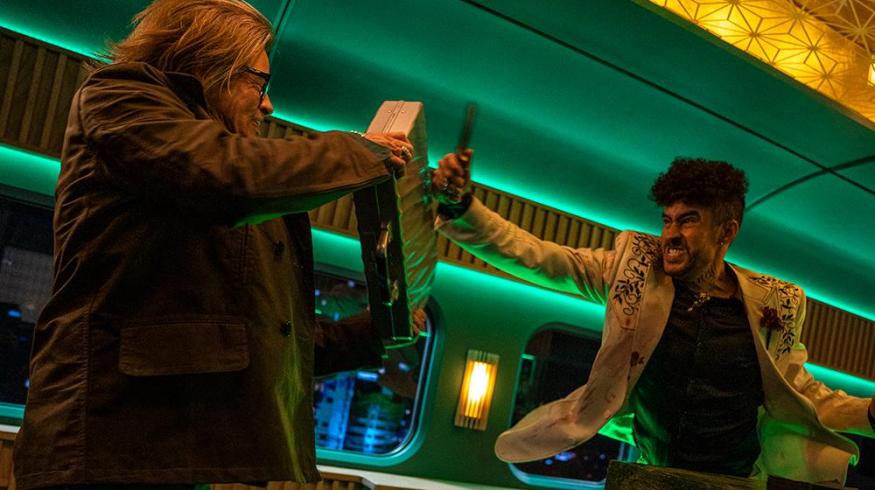
There’s a moment in the film Bullet Train where a character picks up a water bottle which initiates a flashback sequence that’s so long of a story and richness of action that you’d think it was its own standalone short film.
By the time we smash cut back to the scene at hand, said water bottle is used to knock out at least one critical character before being quickly discarded for even more insane fight sequences to commence.
And, that’s the style and pacing of Bullet Train from start to finish. Based on the Japanese novel titled Maria Beetle by Kōtarō Isaka (published in English as Bullet Train), this live-action adaptation is very much alive and full of action.
Directed by David Leitch (of John Wick and Hobbs & Shaw fame), and starring Brad Pitt and a fully loaded all-star cast of chaotic bit characters seemingly ripped from the pages of lost manuscripts from Quentin Tarantino, Guy Ritchie, and Haruki Murakami, Bullet Train is about as energized, chaotic, and hard-punching as a modern movie can be.
This leads us to ask some interesting and insightful questions of the film’s editor, Elísabet Ronaldsdóttir, about her role in the madness, and how she was able to bring so many cross-cut storylines together for a complete, yet still kinetic, whole.
PremiumBeat: Hi Elísabet, thanks for chatting with us! From an outside viewer’s perspective, Bullet Train seems like a fun—yet challenging—project to piece together. What was your approach to balancing so many characters’ storylines at once?
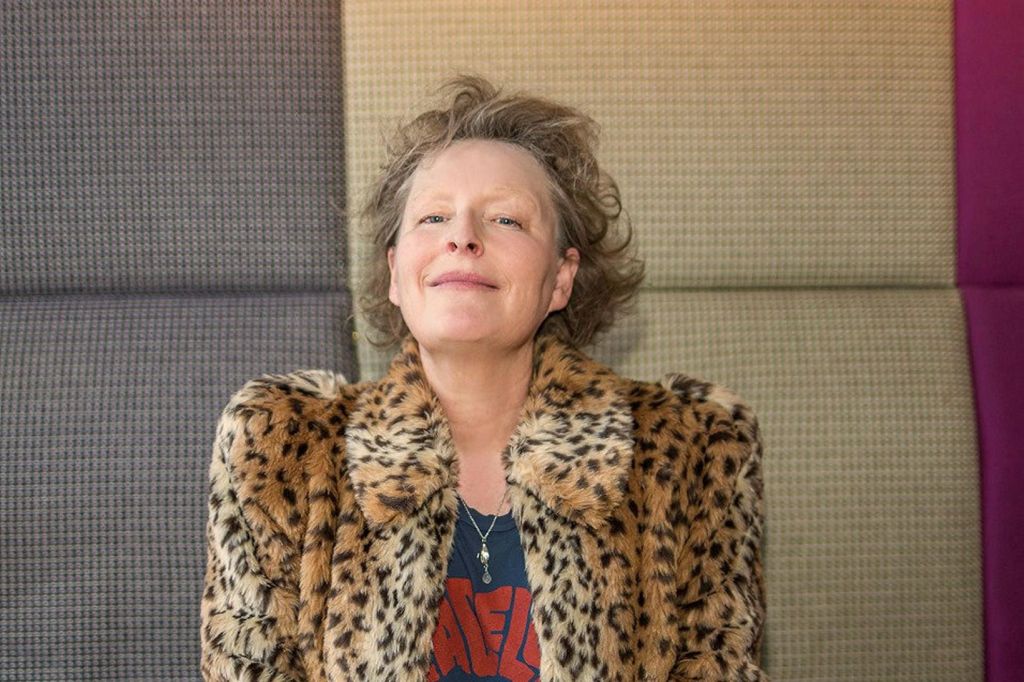
Elísabet Ronaldsdóttir: That’s an interesting question because that was probably the biggest task we had in front of us. How do we balance them? How do they all get to shine without overshadowing each other? But, it was also a lot so fun.
One of the things was how to introduce those characters. In the book—and it happened to be that way in the script, too—in every chapter you’d meet a new character. And, we tried to stay as true to that as possible.
However, I’m a big believer that our job as editors is to translate the script into a different language, which is the moving image.
So, as with any translation between languages, sometimes you have to rearrange sentences or even words. So, when I started experimenting with just having these different characters bounce in and out, it started to make sense to have them meeting each other and being intertwined from the beginning.
It felt like I got a bigger sense of fate in a way you didn’t get so soon in the same way when we had the chapters.
PB: There are also lots of intense and over-the-top action sequences and fight scenes in the film. What’s your approach for giving the audience a sense of that kinetic energy?
Elísabet Ronaldsdóttir: Well, first and foremost, I need to respect all the work that had been put into the film before I even started the edit. I don’t choreograph the action. That was choreographed and produced by some of the best people in the business. I basically tried not to f*** it up!
When we do action, you get pre-vis, and it’s all organized and choreographed. Obviously, this is also a safety issue, too. People need to know exactly what they’re going into so that every punch or hit is choreographed.
What I do, when it comes to editing the action, is to put them together as intended. Then, I just watch it over and over and over again. And, the reason I do that is because it takes a while for something to feel right. Where is it slowing? Where is it holding? Where is it not punching the right way?
Our director David Leitch is a fan of variable speed in his fight scenes. But, for this film, we decided to wait until the big third act fight to bring in the variable speeds to help them hit that much harder.
But, I do watch it over and over and over again also because I find it very important to find the inner rhythm of the scene before I put music on it. Because, if you put great music on something, it’s all gonna look great.
Music is such a powerful medium, so good music can make everything look great. But, if you watch it without music, you might see that it’s not that great in parts.
So, I try to avoid that by just going through it again and again and again, without sound with sound without sound—and then again, with sound and then again, without sound, and it’s not until you find that inner rhythm of the scene where you can say it’s OK to bring in the music as the icing on the cake.
PB: What editing platform did you use for Bullet Train (and why)?
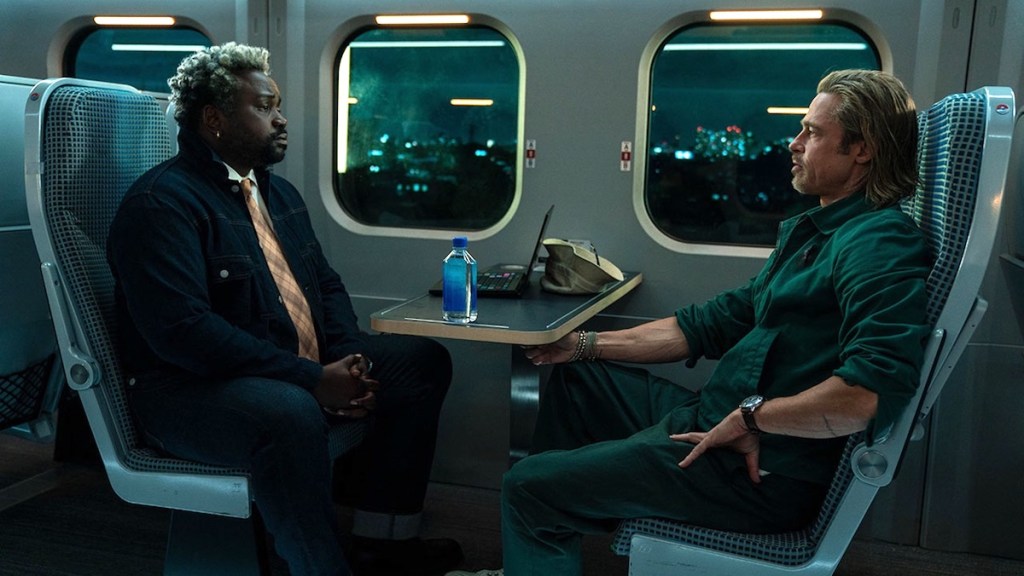
Elísabet Ronaldsdóttir: So for Bullet Train, I edited on Avid. But, I mean, I’ve work on everything. I’ve cut on Premiere, I’ve cut on Final Cut Pro, you know, I’ve used all of them. I’ll cut with scissors if I have to, but we use Avid because all the pipelines are in place, and it’s so comfortable.
I’ve worked with it for years, and it just happens to work most of the time because we usually have a very tight post schedule. So, you don’t want to start something new, if that makes sense. You just lean into what you know—so we use Avid.
PB: Did you use any other plugins or tools to work on this project?
Elísabet Ronaldsdóttir: We did! But I’m not the specialist in this area (laughs). I had an amazing first assistant who ran the ship—Nick Ellsberg—and he got us through COVID because we were all obviously isolating and working from home. And, he got us set up with all kinds of apps that I just don’t remember the names of right now, where he synced all of us up.
So, even if we were working in different parts of the world, because for half a year I was working from home in Iceland. He synced us all up so that it was almost like working from the same place. It kind of works. Everyone felt together and if someone changed something, I could see his bin was locked. Then when the bin was unlocked, I could see the changes right away.
PB: How do you see the future of feature film video editing changing over the next few years?
Elísabet Ronaldsdóttir: I don’t know because the thing is, I started editing on film. You know, both 16 and 35, where you were using the splicer with the white gloves, the lost frame in the bin, and, you know, it’s changed so much since then. I don’t know if I have the imagination to think how much it might change from what it is today.
But, I do think films are always going to exist. And, I think film editors are always going to be essential to any project—I’m extremely positive about that.
But technology-wise, anything could happen. You can just see those deep fakes they’re doing these days. Maybe at some point, we’re going to be generating closeups of an actor because we missed a line and we won’t need to ADR it back in (laugh).
I don’t know but it’s just so much to see. Also, it’s just great to learn new things constantly and to get out of your comfort zone and try new things. I’m excited about it.
PB: Can you share any advice on how to get started in film editing (specifically for those looking to edit narrative features)?
Elísabet Ronaldsdóttir: Yeah, it’s a tricky question, especially because things have changed really fast. The first and second assistants in a big movie are becoming more and more important. And, I hate calling them assistants because it’s not like they’re gonna bring me coffee or anything, it takes a very specific skill set and they’re all clever when it comes to technology. But, it’s honestly such a different skill set that you don’t need as an editor.
I’m doing fine with them, but it worries me because a lot of people go into editing through assistant editing. And, depending on how you look at it, maybe that’s good on independent movies where there’s room for it and you can give scenes and talk through stuff as a team.
But on these big movies, it’s just nerve-wracking timewise. You’re working ten hours a day over day and everyone is busy doing their specific skill sets.
If you want to make it in this business, it’s also important to recognize that it’s a huge jump to get from film to school to working on a blockbuster movie. There’s no doubt about it. Some people will be lucky, but there will be very few and far apart. I think it’s important to form your clan early—even through film school, which can be a great place to form this clan.
Find people you believe in, even if it’s directors, cinematic editors, or others to help form your group. It’s always going to take a lot of cheap work, where you have to edit short films. I’ve gone through all of that working constantly on supporting people around me, but I think it’s essential to find your clan and go together with the people you believe in.
For more filmmaking interviews and editing insights, check out some of these articles, as well.
- The Life and Times of the Kung Fu Film
- Industry Interview: Emmy-Nominated Editor Vera Drew
- Free Epic Sound Effects for Film & Video Trailers
- Interview: The Editor of “This is America” on Building the Iconic Video
- Are Deep Fakes the Future of A-List Casting?
Cover image via Columbia Pictures.