
5 Reasons to Invest in a Dependable Camera Cage
Investing in a good, reliable camera cage is a great way to protect your camera from damage on set, as well as increase its handling stability.
The camera cage is a humble accessory that doesn’t get enough attention. I bought one for my C200 the week after I had a scare on set when the camera fell from a table and could have easily smashed on the floor. Luckily, it was saved by the locking SDI cable (another reason to upgrade from HDMI).
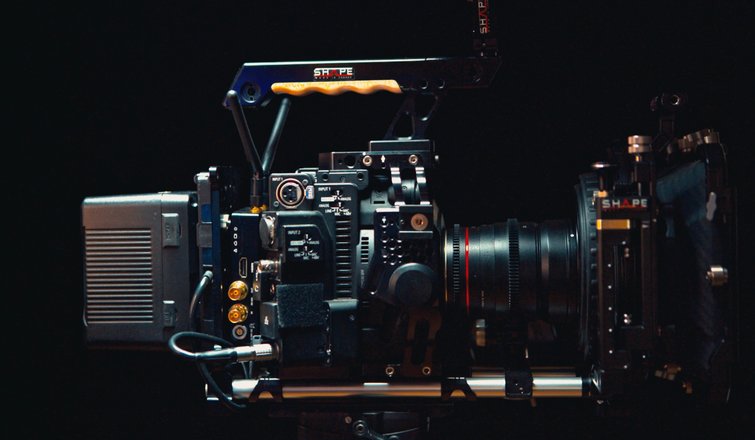
When purchasing a camera cage, stick with a single manufacturer and do not go cheap.
I quickly found my new cage indispensable, and bought them for my other cameras.
A lot of different manufacturers make camera cages ranging from high-end to the Chinese-made knock-offs. The known brands usually get camera specs before new camera bodies are announced, so that they can have units ready by the time the cameras ship. Cheaper ones appear later, and are often copies of more successful brands.
Remember, you get what you pay for in cages. Therefore, it makes sense to stick with a single manufacturer. Mounting points and screw types vary across brands, so you can easily end up with a handle that doesn’t fit right or an arm that won’t screw down.
Here are a few reasons why a camera cage will make your life easier.
1. Protect Your Camera
When most people buy a cage, this is what they’re going for. If the camera is dropped or scrapped, a cage should save the outside from getting damaged. A good cage will protect the camera from bearing the weight of being carried by a top handle — the cage absorbs the stress and not the camera body. This is all the more important with smaller DSLRs and mirrorless cameras made from lighter plastics.
2. Better Ergonomics
Mirrorless cameras don’t come with handles, but even the digital cinema cameras that do have them — like the Canon Cinema range and Panasonic’s EVA1 — have them in a fixed position. This is great for a stock lens, but if you start adding a large zoom at the front, or battery packs at the back of your camera, the built-in handle can be far from the center of gravity, and make carrying the camera awkward. A cage lets you reposition your handle for better ergonomics — or even telescope it like SHAPE’s wooden handle — to compensate for your rig.
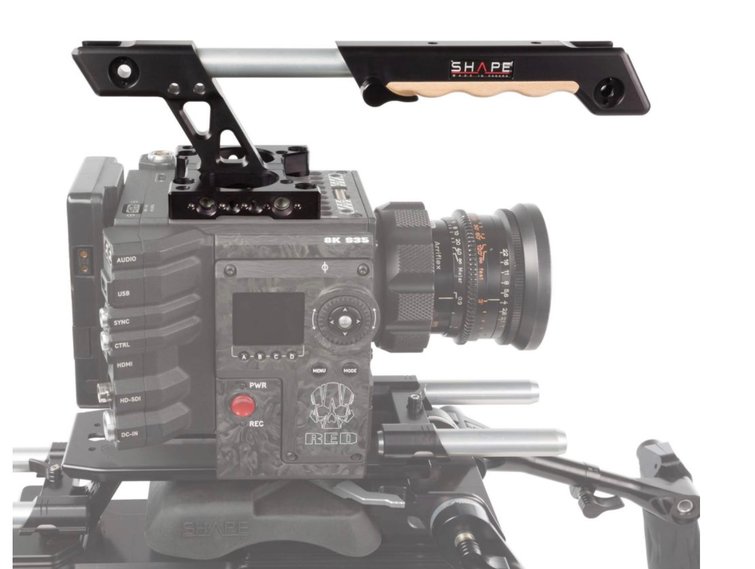
Camera cages add to the stability of your rig.
3. Added Mounting Points
Most professional filmmakers rarely use their cameras as they come out of the box. They add wireless video and audio systems, follow focus controls, and external batteries. Without a cage, the single Cold Shoe Mounts that come with most cameras quickly get used up. A cage provides dozens of mounting points, which you can customize to your individual needs.
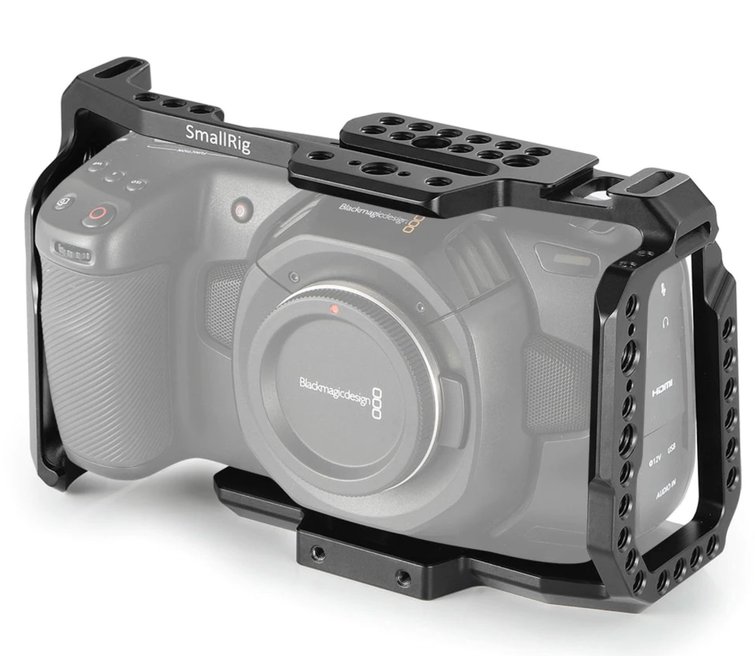
Camera cages also provide you with additional mounting points.
4. Resale Value
The difference between a “good” and a “very good” rating of a used camera is around ten percent in value. For a secondhand cinema camera, that could be hundreds — if not thousands — of dollars. Using a camera cage means not getting the small tool marks and blemishes every camera gets when you change tripod plates, or install and uninstall the handle. I recently took the cage off my C200 to clean it, and found the top and bottom to be as clean as when I first got it — two years and about 500 hours of filming ago.

Using a camera cage will protect your camera from exterior damage.
5. Perceived Professionalism
There are a ton of camera accessories, mostly used to make a camera look more professional and impress clients rather than add any sort of functionality (I’m looking at you, matte box). I regularly use a Canon 5DM3 (shooting Magic Lantern RAW) as a B camera for my C200. Sometimes, I’d get asked about it by clients who wondered what a DSLR was doing on a film set. So, I added a camera cage and a side handle, which now saves me from having that conversation.

A camera cage adds value and saves you money when it’s time to sell your gear.
In the end, it’s worth finding a cage that fits your camera and your budget.
Top image via PV productions.
Looking for more tips and reviews on camera gear? Check these out.