
Find Inspiration Beyond the Big Screen

Filmmakers can draw inspiration from a number of sources. Check out these recommendations to broaden your horizons.
In Stephen King’s book On Writing: A Memoir of the Craft, which is part biography and part reference book for aspiring writers, he says, “If you want to be a writer, you must do two things above all others: read a lot and write a lot. There’s no way around these two things that I’m aware of, no shortcut.”
The same goes for filmmaking. There’s no better way to learn than watching a lot of movies and television shows.
And, not only the good stuff. Watching a film with a 20% rating on Rotten Tomatoes can also be insightful. Knowing what not to do in a movie is just as critical as knowing what to do.
However, you shouldn’t limit your sources of inspiration to these two media. Sometimes, you may find yourself unable to source an idea from film itself.
That pesky third act for your short film just isn’t sliding into place—or your client wants an elaborate advert for his car dealership, and you’re drawing a blank on the concept. It happens. Creativity is fickle.
Let’s look at three different forms of storytelling and how you can use them for inspiration.
Theater for Sound Design
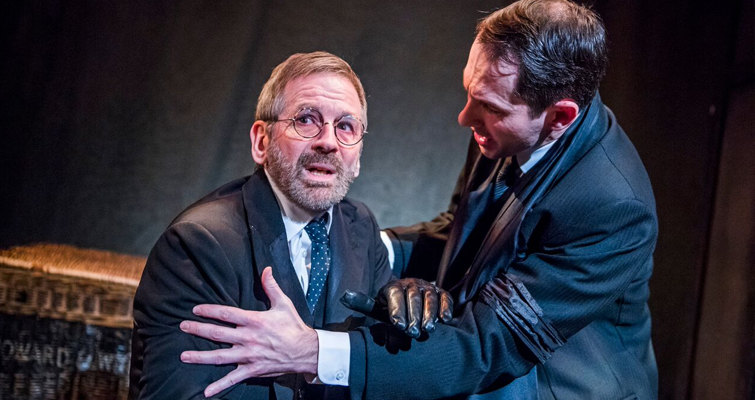
The theater is a fantastic resource for sound design ideas. I’ve been lucky enough to see the play The Woman in Black three times in London’s Fortune Theatre.
While you may know of The Woman in Black as the film starring Daniel Radcliffe, the theater show is slightly different. Although the core plot is the same, the primary difference is that the play takes the form of a performance inside an empty theater.
An older Arthur Kipps wants to tell his story through the power of stage and has come to a young actor hoping that he will perform his story. That’s it—two actors in an empty theater with a few props and several projected backgrounds.
This production might seem somewhat dull, unlike the grandeur of large set pieces and musical numbers. However, the play truly grabs your attention, and it doesn’t let go.
While the actors and crew all do a tremendous job, the sound sets the stage—literally, in this case.
Sound is an often-misunderstood aspect of filmmaking, and many filmmakers argue that clear sound is more important than clear imagery.
Going to the theater to hear the sounds of locations, props, and off-screen actions help you recognize the power of sound design.
In films, sound designers and foley artists add and enhance the sound to complement the footage. In theater, sounds can compensate for missing visual elements.
Video Games for Storytelling and Atmosphere
Video games are the subject of a long-running debate regarding whether or not the medium constitutes art. Legendary film critic Roger Ebert said, “Nevertheless, I remain convinced that in principle, video games cannot be art.”
However, it always seems like video game critics base their opinions on games like Pac-Man or Donkey Kong—antiques in the video game world.
Storytelling
So, suppose you own a console or PC, and have played games within the last decade. In that case, you know that they’re now highly-crafted stories with multiple interconnecting plots, varied characters, and worlds full of history and lore.
While long-form storytelling isn’t anything new, many TV shows have opted for overarching story arcs within the last several years, instead of the conventional procedural format of the ’90s and ’00s.
Many video games have now opted for long-form storytelling, too. These games prioritize story and characterization over gameplay mechanics.
A common term to refer to this type of video game is “cinematic.” Games are increasingly competing with the cinema with grandiose storytelling, powerful visuals, and solid storylines. They’re a trove of narrative inspiration.
Check out these titles for a demonstration of the inspirational power of video games.
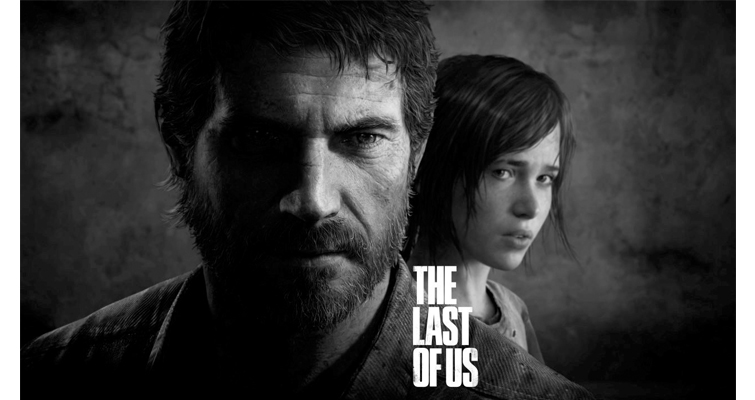
- The Last of Us
- The Witcher 3: Wild Hunt
- BioShock Infinite
- Red Dead Redemption II
- God of War
- Uncharted (1-4)
- The Walking Dead Season 1 (Telltale Series)
Atmosphere
Some films just have an “atmospheric presence.” They present a lasting, noteworthy style. The Witch: A New-England Folktale, The Revenant, and Drive are recent examples. They deliver a viewing experience rich in a stylistic flavor.
And, although they don’t necessarily feature characters everyone can relate to, the substance of the films is enough to render them cult classics or critic favorites.
There are also video games that create this kind of atmosphere.

These games garner praise for their atmospheric elements, while telling an engaging and provocative story.
Comic Books for Composition and VFX
Comic books have become a principal medium for expressing social and political culture. Even superhero books by comic book publishing giants Marvel and DC often come with a “teen and above” rating, and they’re constantly pushing the boundaries of social issues.
So, what does this have to do with filmmaking?
Composition
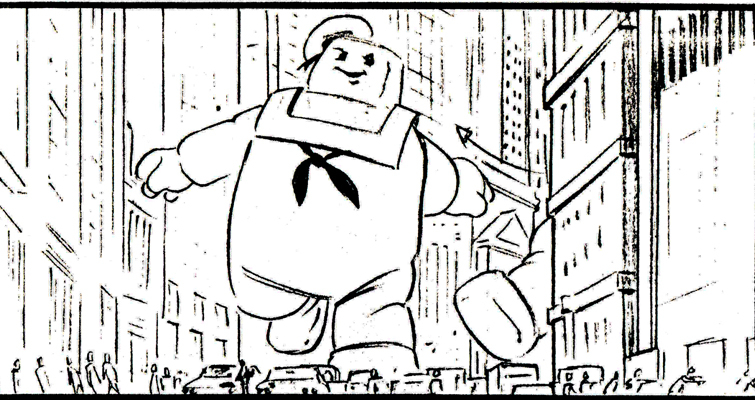
Ninety-nine percent of film productions begin in a comic book fashion with storyboards. The difference between cinematic framing and comic book framing is that, in a film, there will be movement within the frame, and in comics, the movement is implied from panel to panel.
A comic book artist wants to make sure you continue to move your eye from panel to panel until you turn the page.
Conversely, a cinematographer hasn’t done their job correctly if your eye wanders through the frame during a conversational scene. While the two are fundamentally different media, you can ignite a spark when it comes to composition.
Daredevil 28 (2002) tells its story without any text bubbles or narration. I find issues like this incredibly inspiring. The creators (Brian Michael Bendis and Alex Maleev) have produced these images carefully.
The reader must analyze the imagery—there’s no room for a throwaway image. While the two media aren’t completely interchangeable, the notion of choosing your composition carefully is.
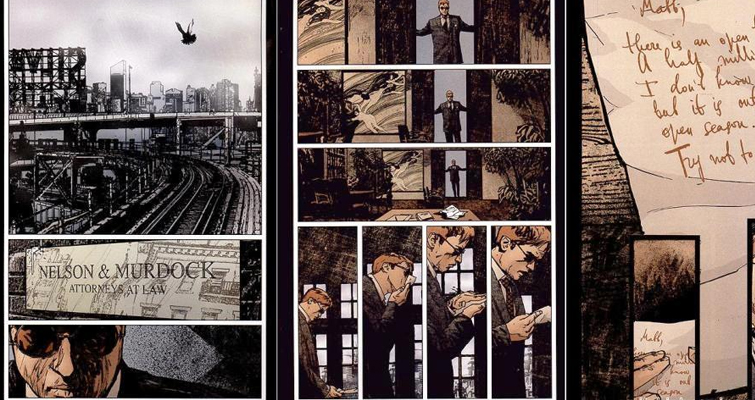
Another good example is Hawkeye 11. The entire issue is from the perspective of his dog. So, again, the panels tell the story carefully to keep from confusing the reader.
However, for a filmmaker, it’s interesting to see an exposed narrative core like this.

For more on the topic of comics and cinematography, check out this seven-minute video on IndieWire featuring comic book creator Ty Templeton.
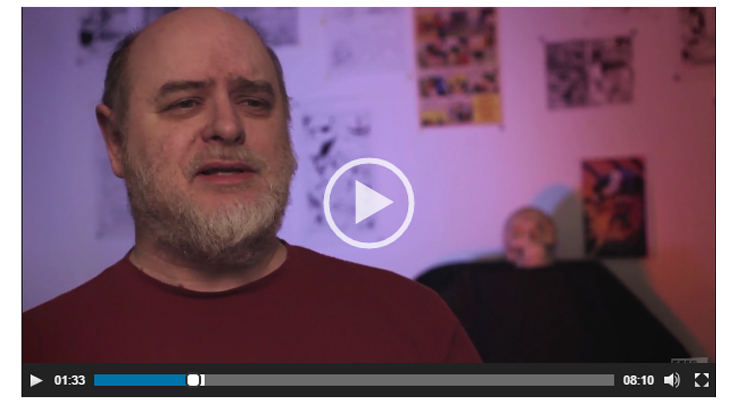
Check out these comic books for compositional inspiration.
VFX
Marvel and DC have both had distinctive house styles for the better part of seventy years. These days, however, both Marvel and DC are bringing experimental art into mainstream superhero comics.
Check the panel below from Batwoman 4 (2011).
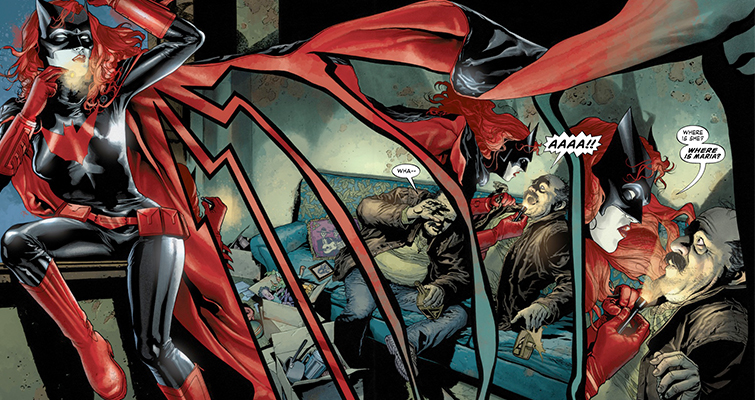
The artist J.H. Williams III has broken the page up into panels using Batwoman’s cape. This is a highly-creative technique that produces something unique and beautiful.
These books are a haven for creative VFX techniques. How could filmmakers translate J.H. Williams’s approach to filmmaking? To display several separate shots in just one scene?
What if your next flashback sequence took its cue from this approach? Photographs around a room can play out scenes like small TV screens. One by one, the static photographs turn into animated memories.
We get to see a character’s emotional responses, and the memories all play out in the same composition without a single cut. (Ok, don’t use that one—I might use that myself.)
Check out these comic artists for creative inspiration.
Conclusion
These examples aren’t set in stone. You may find more inspiration for lighting from theater rather than sound, or costume ideas from a video game. The list is endless.
The idea is to broaden your horizons when it comes to sourcing ideas. You can only learn so much from watching Akira Kurosawa‘s filmography over and over.
While film and TV are your principal sources of inspiration, other forms of entertainment can be just as influential.
Find even more filmmaking inspiration and know-how:
- On Fading to Black: The Hows, The Whens, and The Whys
- The Filmmaker’s Guide to the Establishing Shot
- Revise, Revise, Revise — A Writer’s Guide to Practical Editing
- 5 YouTubers to Follow for Creative Cinematography
- The Flashback Sequence Effects Tool Kit
Cover image via Naughty Dog.